
How to Rank on Google Without a Big Budget: A Practical Guide for SMEs
Most small business owners assume SEO is a game for companies with large marketing budgets and dedicated content teams. They are wrong. The businesses ranking consistently in Google search results are not always the best-funded — they are the most strategically focused. If you are willing to be deliberate about where you compete, you can rank on Google without a big budget. This guide shows you exactly how.
Why Budget Is Not the Primary Ranking Factor
Google does not rank websites based on how much money a business has spent. It ranks pages based on relevance, authority, and technical performance. A small business with a tightly focused content strategy and a clean, fast website will consistently outrank a larger competitor with a bloated site and scattered messaging.
The mistake most SMEs make is trying to rank for broad, high-competition keywords — terms that established businesses with years of domain authority have already locked up. Competing for “digital marketing agency” against companies with hundreds of backlinks and thousands of indexed pages is not a strategy. It is a waste of time and money.
The path to ranking on Google without a big budget is specificity. Find the smaller, more targeted searches your ideal clients are making, and own those before expanding.
Start With the Right Keywords
Effective SEO for SMEs begins with keyword research that prioritises intent over volume. A keyword with 200 monthly searches from people ready to buy is worth far more than a keyword with 10,000 searches from people who are just browsing.
Focus on three types of keywords: problem-aware searches (people describing a problem they have), solution-aware searches (people looking for a specific type of solution), and local searches (people looking for services in a specific geography). These are the searches where you can rank on Google without a big budget because competition is lower and intent is higher.
Use free tools like Google Search Console, Google’s autocomplete, and the “People Also Ask” section to find the exact language your potential clients use. Do not guess. Look at what they are actually typing.
Build Content That Answers Specific Questions
Once you have your target keywords, the next step is creating content that directly and thoroughly answers the questions behind those searches. This is where most SME content fails. Blog posts that are vague, surface-level, or obviously written to satisfy a keyword rather than serve a reader do not rank and do not convert.
Each piece of content should target one keyword, answer the question completely, and link naturally to your services. Structure matters: use a clear headline, subheadings that mirror how people scan content, and a conclusion that points toward a next action.
One well-written, genuinely useful 1,000-word post will outperform ten thin 300-word posts every time. Quality and specificity beat volume when budget is limited.
Fix Your Technical Foundation First
Before creating any content, confirm that your website is technically capable of ranking. Page speed, mobile responsiveness, and clean site architecture are not optional — they are baseline requirements Google uses to determine whether a page deserves to appear in results.
Run your site through Google PageSpeed Insights. If your score is below 70 on mobile, fix that before writing a single blog post. A slow site will not rank regardless of how good the content is. Compress images, remove unnecessary plugins, and ensure your hosting is not throttling your load times.
Also check that your site is indexed. Open Google and search site:yourdomain.com. If your pages are not appearing, Google is not finding them. Submit your sitemap through Google Search Console and resolve any crawl errors before proceeding.
Build Authority Through Consistency, Not Spend
Domain authority — the measure of how trustworthy Google considers your site — is built over time through consistent publishing and inbound links. You do not need a link-building budget to start. You need a publishing cadence you can actually maintain.
One quality post per week, published consistently over six months, will build more authority than six posts published in a burst and then nothing for three months. Consistency signals to Google that your site is active and maintained. It also gives you more indexed pages, more entry points for search traffic, and more opportunities to earn organic links as people find and share your content.
Reach out to complementary businesses, industry directories, and local business organisations for free backlink opportunities. A genuine mention from a relevant, trusted site is worth far more than dozens of spammy directory listings.
Track What Is Working and Double Down
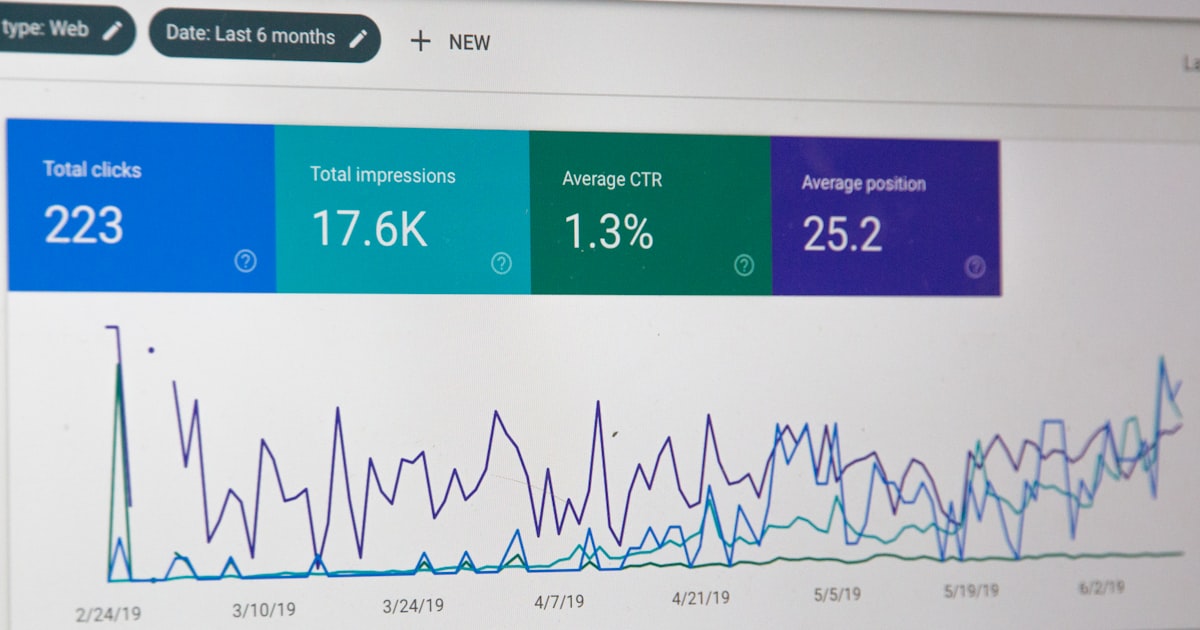
SEO without measurement is guesswork. Set up Google Search Console and Google Analytics from day one. Within three to four months of consistent publishing, you will start to see which pages are gaining impressions and clicks. Those pages tell you exactly where to invest more effort.
Double down on what is working. If a particular topic or format is generating traffic and enquiries, produce more of it. If a page is ranking on page two for a keyword, update and expand it — moving from position 15 to position 5 for a relevant keyword can increase your traffic from that term by 300% or more.
Ranking on Google without a big budget is not about doing everything. It is about doing the right things with precision and patience. The businesses that win at SEO are not the ones that spend the most. They are the ones that stay focused long enough to see compound results.
Ready to build an SEO strategy that works for your budget?
We build practical, focused SEO systems for growing businesses. If you want to rank on Google without wasting money on tactics that do not move the needle, let us show you where to start.